
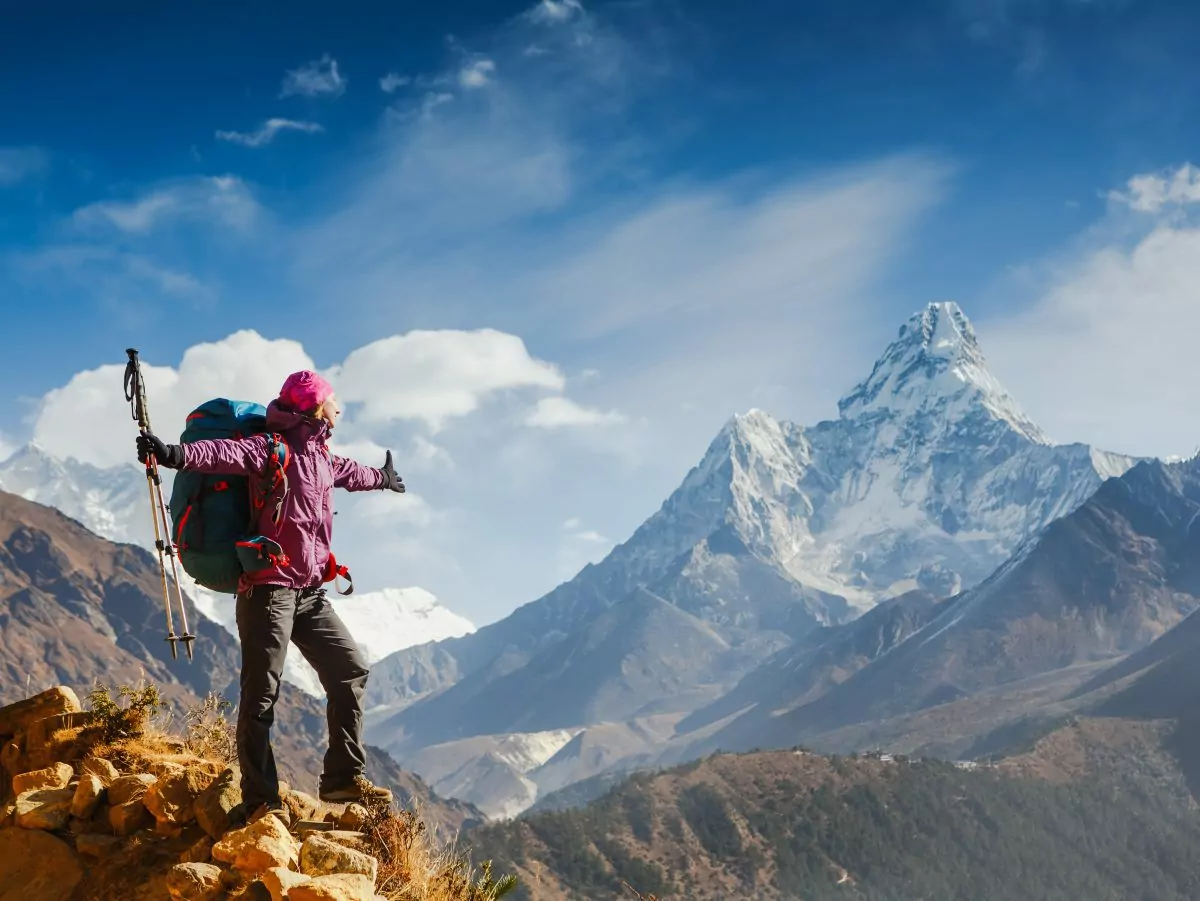
Arguably the most iconic Himalayan odyssey is the Everest Base Camp Trek, which draws trekkers up close to Mount Everest, ancient Sherpa culture, and incredible mountain scenery. The EBC Trek itinerary typically consists of a normal cycle day in and step-by-step walking, exploring & resting, but it is equally enticing and enjoyable as the previous ones.
And suspended in the realm between dawns above snow-capped summits and nights at quiet woodland lodging houses, this could perhaps be the most memorable Himalayan journey you’ll ever undertake. Trekkers usually wake up early and get ready for hours of walking in Sagarmatha National Park while enjoying every bit of Nepal’s gorgeous trekking routes all the way through. Each day is a different landscape, adventure, and memory.
Mornings with Mountains and wicked bags
On an Everest Base Camp trek, the average day begins early in the morning—often waking up to one of the most picturesque mountain villages and stunning Himalayan terrain you have ever seen. Wake up to the sound of the crisp mountain air and the view of Everest, Ama Dablam, and Lhotse—what better way is there to start a day?
Regular hot breakfast at a teahouse in the morning, and trekkers pack their backpacks for that day’s trekking load after filling the water bottles and taking clothing layers off to tackle unusual weather. Rapid changes are being made as you deal with the temperature, oxygen, and other aspects of passing over high altitudes. You have to plan accordingly before taking on this walk. Pre-dawn is an interval and tidy as trekkers pause for breath before their next burrow along the trail.
Walking Through the Himalayan Trails
A short time after breakfast the main hiking tour embarks, and one travels along paths that lie between charming mountain villages. Normally walk from 4 to 8 hours for the Everest Base Camp Trek, depending on destination, elevation, and trail types. Trekking through forests, suspension bridges, riverbeds, and rocky paths helps trekkers experience the vivid scenery of the Everest region. Tours in Sagarmatha National Park lead to pinned wildlife sightings and colorful prayer flags and monasteries and connect to the shared Himalayan view. There are prime things you can manage, like walking speed through the cruising in Nepal, and slow motion identifies altitude sickness.
Sherpa Culture on the Way
The EBC Trek is known for its awesome mountain views, but one of the special things about this trek is to see and experience genuine Sherpa traditions. The closest villages outside of town (e.g., you would get an idea of how life is like in the Himalayas, and that would have covered many thousands of years, the time people and mountains have existed side by side.
Trekking days bring years-old Sherpa guides, lodge owners, and spectacular prayer-carpeted Himalayan Buddhist monasteries. This Everest Base Camp trip is nothing short of a relationship between people and mountains. The richness of this adventure is that you will discover on the way unique Sherpa culture and traditions besides the marvelous views of Mount Everest.
Subsections on the Absence of Rest and Equatemic Feeding
Moreover, rest days are actually a crucial component of every day in the trek to Everest Base Camp, especially with even more significant altitude gains during this adventure. Typically, trekkers take a breather down the trails to drink some water, munch on a quick snack, and absorb views of the stunning snow-peaked Himalayas. Since at such altitudes acclimatization takes a toll on you, high-elevation treks have heavy acclimatization. To help the body adjust and acclimatize for safe passage, most itineraries will incorporate rest days, namely in Namche Bazaar. During those lower times, trekkers will brush shoulders with hikers and photographers in the Everest region in preparation for the next step.
Lunch Breaks and trekking escapades for the considered afternoon
Trekkers often stop for lunch at a local teahouse in the early afternoon, only to continue on their way to their next nightstop after. Menus revolve around noodles, soups, dal bhat, and other relatively simple, high-carb fare. The afternoon, of course, has always struck me in another way because while the sun is fading gold high above, it creates colors in mountains and valleys that change as the orb appears to shift across a stage.
During this portion of the Everest Base Camp Trek, hikers walk through spectacular landscapes while acclimatizing to higher altitude. Or the other adventure is this: which one is every afternoon on the trail after somewhat around 56 laps? Bipedalism is the training day of gorgeous countryside, winning a thousand fellow lives and becoming changes for lulz, making it a clothed factor to adjust the bounty and get away count—worth it, my Himalayan fun. Every step taken brings trekkers one step closer to their ultimate goal.
Back to the Teahouse and an Evening of Relaxation
At the end of each day’s walk, they reach a mountain teahouse where they rest, freshen up, and enjoy the welcoming atmosphere of locally established lodgings. Evenings can be quite pleasant; stories of the day are shared, photographs taken are gone through, and preparation for the next leg of the EBC Trek is on. Players will be able to engage with the vast and remote Himalayan realm, unburdened by luxurious lodgings.
With the day closing warm from the Mediterranean winds, it begins to cool at night as soon as dusk sets on the Aegean Joint, re-animating hot food & chats. The rest is definitely one of the essential pieces to Nepal trekking, as on those moss-covered evenings, it is a merit to recover and extraordinarily blustery; you excite with vitality for the beaten path.
Post-Bedtime Routine For Another Day Of Hikes
Normally treks were about checking gear, packing backpacks, and talking to your guides for planning the next day before going to bed. Since every day on the Everest Base Camp Trek demands both physical endurance and mental alertness, a good night’s sleep is crucial. As most trekkers would say goodbye to their few minutes of rejoicing on finally stepping out and observing an immaculate dawn, cleaning the Himalayan star-spangled night sky turns into a beautiful journey into everlasting memories in this high range. Home to serene surroundings, traditional villages, and towering peaks, nights in the Everest region are one of a kind. Well, training for what will also be the next day takes you through one of the world’s better trekking locations steadily and happily.
What is the different day for each Everest Base Camp trek?
Although the day-wise itinerary of the Everest Base Camp Trek has repetitive actions day by day, no two are alike. Every section (of the trail) brings its own identity with either ever-changing topography, villages + cultures along the way, or iconic mountain views. Leaving Lukla, the adventure begins; from day one, every day is what I like to call a new Everest (pun intended) or another opportunity to learn about yourself while also exploring your physical limits. The Himalayas is not only a destination place; it is like an experience—walk the pleasure in one of the most beautiful regions on planet Earth. Most of the trekkers carry the memories with them for forever even after they return home from Nepal.